
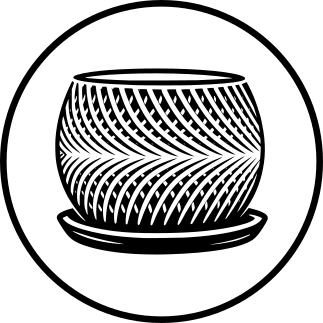
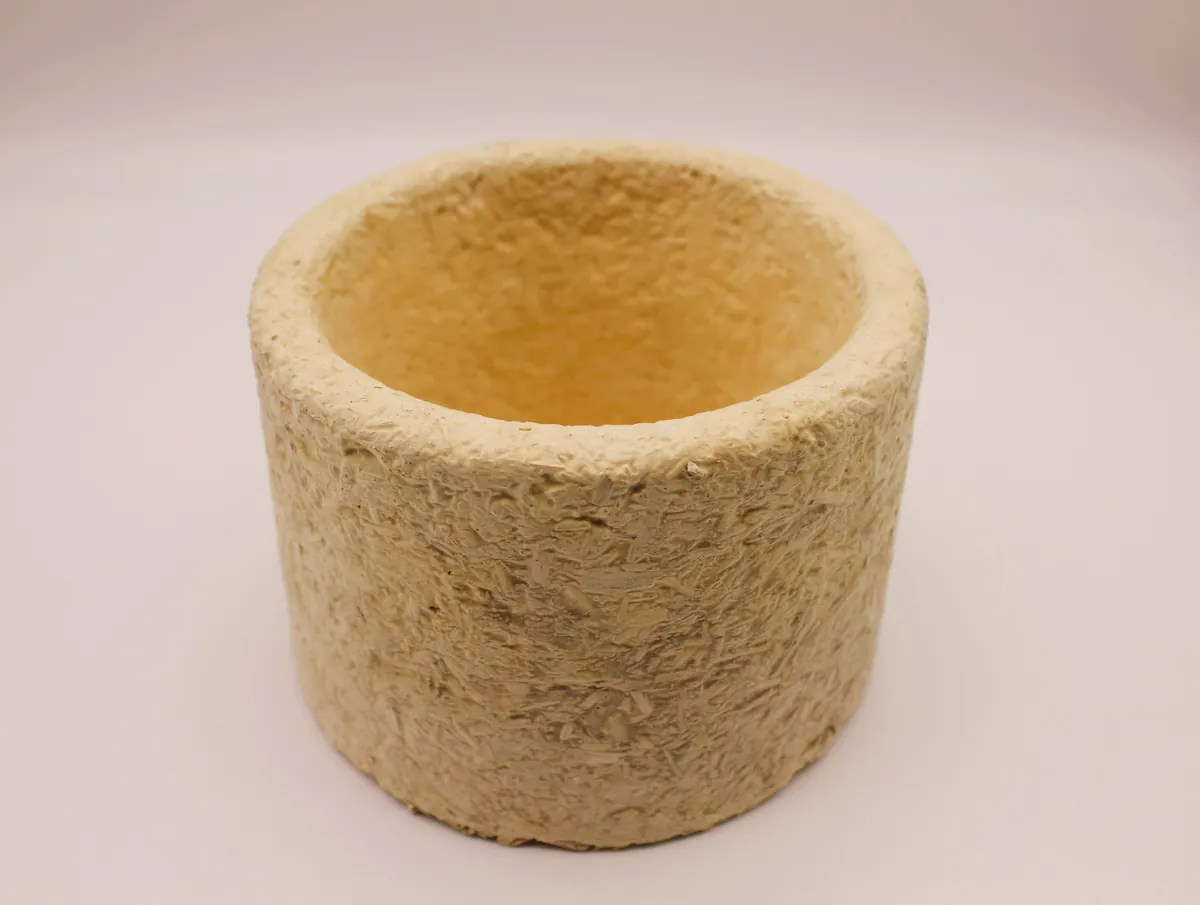
This flower pot was not moulded in plastic, turned, or fired in a kiln like pottery. It grew. Its material is mycelium: the network of threads that keeps fungi alive underground and which, as it grows, binds plant fibres into a solid object.
A living material while it grows, inert once dried.
100% biodegradable: at the end of its life, it returns to the soil.
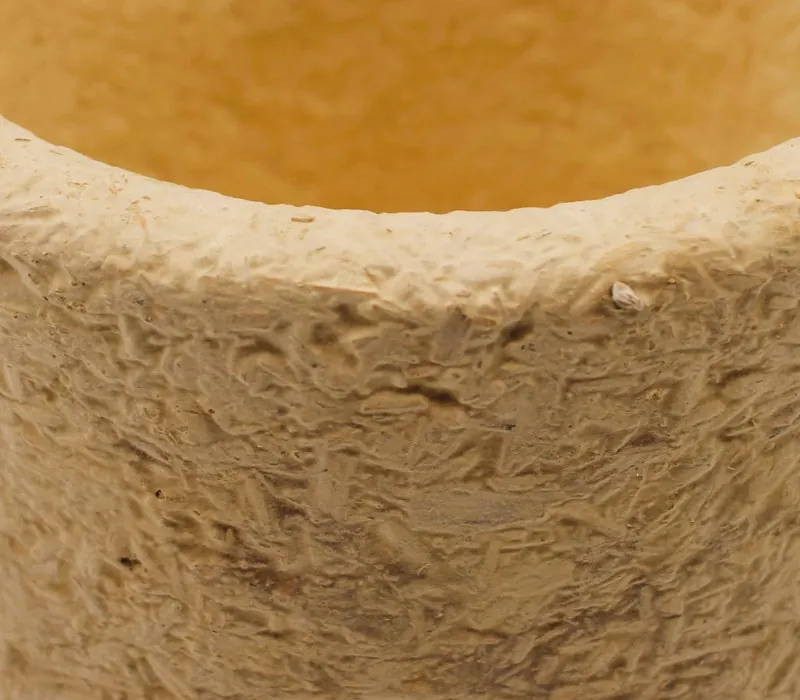
Grown one at a time: every pot has its own texture.
What is mycelium?
The mushroom you pick is only the visible part. Below the surface lies the mycelium: kilometres of very fine threads, the hyphae, which explore the soil and digest plant matter.
As it grows through plant fibres, this network wraps them and binds them together, like a natural glue. Once dried, the whole thing becomes a light, rigid material.
You do not manufacture a mycelium pot: you give it a shape, and you let it grow.
From substrate to pot: the process in six steps
Here is the general process for moulded mycelium, as described in the technical literature. Times and temperatures vary with the fungus and the substrate used.
A plant substrate
It all starts with plant fibres, often farm by-products such as hemp, straw or sawdust. This is the fungus's food.
Inoculation
Living mycelium, the mushroom "spawn", is mixed in to act as the seed.
Colonisation
Away from the light, in warmth and high humidity, the threads spread through the substrate within a few days and turn it white.
Moulding
The colonised substrate is packed into a mould. The mycelium keeps growing and fuses the fibres into a single block, in the exact shape of the mould.
Unmoulding
The piece comes out of the mould covered in a fine white down: the mycelium has formed a skin on its surface.
Drying
A spell in the heat dries the piece and stops the growth. The pot becomes inert, light and solid: it no longer grows.
And at the end of its life?
That is the whole point of mycelium: it is 100% biodegradable. When the pot has had its day, it returns to the soil, leaving no plastic behind.
Back to the soil
Broken up and composted, the pot turns back into organic matter.
Using it well
- Keep it dry: mycelium does not like standing water.
- Slip the plant in with its nursery pot, or choose plants that need little water, such as succulents.
- A dry brush is enough to dust it.
The pot in practice
- Material: mycelium grown and dried in the workshop;
- Size: 12.5 cm in diameter, 9 cm high;
- 100% biodegradable;
- Made in our workshop in Thônes, Haute-Savoie, €18.
Discover the mycelium flower pot in the shop, or our other creations in the guides & advice.
Frequently asked questions
What is mycelium?
It is the underground part of fungi: a network of very fine threads that feeds on plant matter. Growing through plant fibres, it binds them together and, once dried, forms a light, rigid material.
Is the mycelium pot biodegradable?
Yes, it is 100% biodegradable. At the end of its life, broken up and composted, it returns to the soil without leaving any plastic.
Is the mycelium still alive in the pot?
No. Drying stops the growth: the pot you receive is inert, it no longer grows and does not produce mushrooms.
How do I care for a mycelium flower pot?
Keep it dry, slip the plant in with its nursery pot or choose plants that need little water, and dust it with a dry brush.